
Buyer's Guide
Home Generators Introduction
Regardless of where you live or work in the United States, one thing remains true: at some point, your power will go out.
Many people don’t give electricity a whole lot of thought… until it’s not available. But any homeowner who has thrown out a freezer’s worth of meat knows even short power outages can be costly. Unfortunately, with a near total reliance on electricity to power our daily lives, the danger goes far beyond just the loss of food.
In some situations, power is crucial to safety and welfare. For example, some garage doors and security gates cannot be opened without power. Emergency pumps that are used to prevent flooding or simply pull fresh water from a well all require electricity. Try to imagine your life without one or more of those things for any length of time and you’ll quickly realize why so many homeowners are investing in home generators.
You have to be prepared. Because once disaster strikes, the damage is done.
Home generators come in a wide range of sizes and setups for every situation. This BuyerZone Home Generators Buyer's Guide will help you understand what the basic types are, how to choose the right size generator for your home, and how much you can expect to pay.
To begin, the first aspect to familiarize yourself with is the power: how it's measured, and how to select the type of machine that will provide the level of power you need. Get started here.
Basic Types of Home Power Generators
All electric generators have two main components: a motor that burns fuel – usually propane, natural gas, gasoline, or diesel – and a generator head that turns power into electricity.
The electricity created by a generator is measured in voltage and watts. Voltage is a measure of the “pressure” of an electric current. Wattage measures the “volume” of electricity being created. When choosing a generator, you’ll need to know the specific voltage your situation calls for. With that information, you can pick the model that supplies enough wattage for everything you’ll be running.
Voltage
In the United States, standard household current is single phase, 120VAC. Most houses have either 110/220v or 120/240v service, meaning they have two 110v or 120v circuits. The two circuits are combined to provide 240v for power-hungry appliances such as electric ranges, clothes dryers, central air conditioning, and water pumps.

Generators are available for all common voltages. Just make sure you know which voltage supplies your location to ensure you get the generator that pairs with your electrical setup.
Wattage
Unlike voltage requirements, which are set based on your existing circuits and electric service, wattage requirements increase with each additional appliance you want the generator to power. Choosing the right wattage is critical. We'll cover sizing your generator in the next section.
For now, just keep in mind that small generators produce around 800 watts, while large industrial generators can produce up to 2,000,000 watts (2,000 kilowatts or kW). Home generators average between 8 to 60kW.
Types of generators
There are a variety of modern generators, including some that are designed for specific situations. But the two basic types that continue to be most common are standby generators and portable generators.
1. Standby generators are used to offset the harmful effects of power outages. They start around 8kW and can easily be as large as several hundred kilowatts for use on ranches and large estates. As such, they’re installed permanently as an emergency power source for your home and hardwired into your electrical system.
These models are typically fueled through standard city utilities, including natural gas and propane. It’s also worth noting that some manufacturers are beginning to experiment with solar power and other alternative power sources. But these options are still in the development phases and not currently viable.
2. Portable generators are used to provide power in places that aren’t connected to the power grid, such as construction sites, campgrounds, or other remote locations. In a pinch, they can be used to power essential appliances during a power outage but are typically gasoline-fueled and therefore not very economic or practical for long-term outages or heavy demand.
Portable generators were designed to be used for short periods of time – only a few hours at a stretch. And they tend to be much smaller and less expensive as a result of this limited capacity. Built-in fuel tanks allow them to run anywhere, with standard power outlets that let you plug in ordinary extension cords, tools, gadgets or appliances. The smallest gasoline-powered portable generators are under 1kW and the largest reach around 15kW.
Green generators and other alternatives
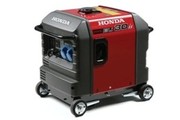
Inverter-generators are an alternative to the two main varieties and have been created for a few specific purposes. Typically gasoline-powered, they’re often smaller than even a standard portable generator. As a result, they run quieter than the open-frame models and are popular for their ability to tailor the engine speed to the required load, saving gas and wear and tear on the generator itself.
Inverter generators are a good choice for camping and similar outdoor applications where noise restrictions may limit your activities. They’re also good for powering sensitive electronic equipment.
Propane-powered generators are a more modern variation that provides dual benefits:
- Through the use of propane, they burn cleaner and often more cost-effective than other generators.
- They’re ideal for emergencies and other situations where gasoline might be hard to find. Easily powered through a backup supply of propane, they can run continuously simply by swapping out tanks.
Moving right along, your next step is to figure out the size of home generator required to run all critical appliances (yes, the coffee maker counts) for an extended period of time.
Sizing Home Electric Generators
The right electric generator can provide just enough wattage to operate all your essential appliances. Too few watts and you'll overload the generator, potentially damaging it and anything plugged into it. Too many watts and you'll waste money on the initial purchase… and even more on the fuel required to keep it running.
How to measure wattage
There are two ways to assess the size of the generator you need (and one way to avoid).
Method #1: Determine the power you're using directly.
Using an ammeter (a device that measures electrical current), a qualified electrician can determine exactly how much power each electrical device in your home uses.
Total up the watts for each item to be powered and you'll have a baseline for the power you'll need, making sure to leave a little cushion to avoid overload (more on exactly how much room to allow for in a minute). Some generator dealers will visit your home and do this as part of the sales process.
Method #2: Determine how many watts your appliances draw on your own.
Most appliances will list their power requirements in the instruction manual or on the serial plate you'll find on the side, back, or bottom of electronic devices. The number you're looking for is the watts. If the watts isn't listed specifically, you can calculate it with the following formula: watts = volts x amps. Many devices list amps at a given voltage, so just do the multiplication to see how many watts they draw.
To give you a rough idea, wattage requirements for common household appliances include:
|
|
Method #3 (the one to avoid): The way not to decide what size generator you need is to estimate.
Dealers can often come up with a good guess as to what size electric generators your home might need. But most quality sellers will be willing to work with you to total up all the devices you want to power before finalizing the decision. Rules of thumb based on the square footage of your home are never a good substitute for actual investigation of the devices your generator will be powering.
Running vs. startup power
One important characteristic to know about electric motors is that they take much more to start than they do to run. Any electronic appliance with significant moving parts -- including fans, pumps, compressors (on refrigerators), or air conditioners -- can require three to four times as much electricity to start than it does to run continuously. Because of this, you need to increase your wattage requirements by multiplying the total wattage by at least two and as much as four on these appliances.
However, multiple appliances rarely start up simultaneously. Even a refrigerator only uses its compressor occasionally. So just make sure to add enough power for the biggest startup requirement. To do that, figure out which device has the largest difference between running load and startup load. Then add that number to the total running load of all your appliances to get your total wattage requirement.
What size home electric generator to buy
Once you've determined your total wattage requirement, you'll want to include a small cushion, allowing everything to run comfortably and preventing overload.
Plan on purchasing a generator that can deliver a rated capacity of about 20% more than your exact requirements. This will give you some room to add a few small devices and extend both the lifespan of the generator and the appliances it's powering.
It's now time to take the calculations from above and factor them over a period of hours, days, and even weeks (if you're planning for a major disaster). This will tell you how much power you'll need to plan for and, by extension, how much fuel. Fuel and home generator features are an important part of the purchase process.
Buying Considerations
Once you've determined the size of the generator you need, there are several other equally-important considerations to keep in mind about your generator purchase.
Fuel choices
Generators can run on several different types of fuel. Home generators almost always run on natural gas or propane. The primary advantage of this is that no fuel storage is required. The generator is simply connected to your utility lines and draws fuel when it needs to.
The choice between gas and propane is based solely on which is available in your area. But if you're lucky enough to have a choice between the two, here's how they compare:
- Propane – Propane is a green fuel in its unused state and remains environmentally-friendly post-use as well. For this reason, it's the better choice where environmental impact is concerned. However, its cost is driven by supply and demand and tends to fluctuate with the seasons (typically more expensive in colder months).
- Natural Gas – When discharged into the environment in its unused state, natural gas is classified as a greenhouse gas, contributing to pollution. However, post-use, it's considered a clean alternative fuel and is by far the more cost-effective of the two. In fact, depending on the cost of propane, the cost of natural gas can be almost half as expensive in some cases.
What about diesel?
Diesel fuel is popular for larger, commercial generators, but very rare for home models. These models tend to be slightly more dependable and somewhat cheaper to operate than generators that run on natural gas or propane.
However, they require deliveries of diesel fuel and a large holding tank. And while they've cleaned up their act considerably, emitting a fraction of the pollution in comparison to engines from a decade ago, diesel generators are still not as clean-burning as other types.
For portable generators, the most common fuel is gasoline. One major drawback is that gasoline can't be stored for long periods of time. So if you intend to keep a portable generator around for emergencies, you may want to consider propane instead.
- SAFETY TIP: Never run a portable generator indoors! They produce toxic fumes that can quickly cause serious health problems and even death.
Portable and standby generators are sometimes available in dual- or tri-fuel configurations, where switching from natural gas to gasoline or propane is as easy as reconnecting a hose.
Motor speeds and cooling systems
A related aspect of generator motors is the speed at which they run, measured in RPMs. Generators made for the U.S. market operate at one of two speeds: 1800 RPM or 3600 RPM. 1800 RPM motors will last longer and run quieter. In contrast, 3600 RPM motors are smaller and lighter.
A generator motor creates a lot of heat. As a result, it needs a cooling system to prevent overheating. Standby generators are air-cooled or liquid-cooled and sometimes make use of both. The major difference between the two is that air-cooled systems are louder and not quite as effective. Liquid cooled systems are quieter and more dependable but also more expensive to purchase and maintain.
Larger generators (starting around 30kW and up) are often liquid-cooled and operate at 1800 RPM, designed to provide the best combination of quiet operation and reliability. Portable generators are almost always air-cooled and operate at 3600 RPM. In some cases, you may be able to choose between the two RPM settings before purchase. In these instances, go with 1800 RPM unless portability is one of your main concerns.
It's important to note that generator manufacturers don't actually build their own motors. They use engines from well-known names like Ford, GM, Caterpillar, and Honda to power their generator heads.
- BUYING TIP: When choosing a generator, look for one that comes with a brand name motor. It will be much easier to find parts and service for a well-established brand. Plus, these engines include the benefit of decades invested in development and innovation and tend to be far more reliable than a no-name brand.
Additional features
Depending on your needs, many generators may work well. But with a few extra bells and whistles, one or two may work better than the rest. Modern electric generators come with a wide variety of advanced features that allow them to be used in extreme environments and even operated remotely.
Popular add-ons include:
- Safety enhancements – prevent injuries and damage to your generator. Quality standby generators will shut down if they lose oil pressure, overheat, or are being worked too hard.
- Solid steel or aluminum enclosures – typically found only on standby generators, this construction reduces noise, provides weather protection (often withstanding winds up to 150 mph) and brings the generator into compliance with all relevant emissions regulations.
- Large fuel tanks – typically a component of portable generators, these enable the longest running-time in locations where additional fuel is unavailable.
- Composite mounting pad – sometimes included as a bonus with small- to medium-sized units, this eliminates the need to pour a concrete base.
- External breaker connection – simplifies access for maintenance personnel and fire marshal.
- LCD display and external LED status indicator lights – provides easy monitoring and management of generator, including runtime and maintenance intervals, as well as quick-check for system status.
- Internet remote monitoring – allows you to start and stop the generator or monitor its status from anywhere in the world through your smartphone, laptop, or any other Internet-enabled device.
After settling on the type and size of generator, you have to figure out how you're going to get it home and installed.
Installing Home Standby Generators
For homeowners who purchase standby generators, sellers usually come out and evaluate what it will take to install the system.
Depending on your location, some sellers may offer delivery, installation, and preventative maintenance services. If they don't, they should certainly be able to put you in touch with qualified electricians and plumbers to help install and maintain your system.
What to factor in
Before choosing a standby generator, you'll need to decide what equipment you want to run. Some of the most common devices include refrigerators, freezers, electric ranges, water heaters, security systems, sump pumps, essential lights, electric garage door openers, ejector pumps, well pumps, and septic systems.
Keep in mind that every electronic device you add to the list will increase the wattage you need… and drive up your costs. While a single light bulb will only add 70 watts to your needs, a mid-sized central air conditioner can draw 4,000 watts or more. If using a generator only for emergencies, limit your choices to those devices that are truly essential during a power outage and you'll keep your costs down.
Getting it installed
Because standby generators are wired into your home's electric system, proper installation is critical. Shoddy installation can cause the generator to overheat or even damage your existing wiring and appliances.
The location of your existing electric service panel and gas line is important too. The generator will be mounted outside but within close proximity to your home or business, much like a central air conditioner. For ease of installation and operation, it's best if it can be positioned near the electric panel and gas line.
The generator will also need to be installed on a level surface, most commonly a concrete pad, but occasionally hard rubber or a composite material. Some sellers cover “everything” in their installation charge, including pouring a concrete pad. Others won't. Make sure you know exactly what the installation of your generator will involve before committing to a purchase.
If not covered by the generator seller, you'll need a plumber or representative from your utility company to connect the gas or propane line, if applicable. Generators can be sensitive to both fuel pressure and volume, so high-quality connections are important.
Electrical connections
To connect a standby generator to your existing electrical system, you'll need a separate device called an automatic transfer switch. The transfer switch is an essential safety system that prevents your generator from feeding electricity back to the neighborhood power grid.
When the power goes out, the generator will start up automatically. After a few seconds required for stabilization, the transfer switch will connect the generator to your home. When power comes on again through the grid, the switch will disconnect the generator and return your setup to normal.
- SAFETY TIP: Do not attempt to install a transfer switch yourself. In some cases, the installation of transfer switches may require local permits but it always requires a professional electrician. The model you select will depend mainly on the size of your generator.
In addition to the generator and transfer switch, you may want to invest in a dedicated electrical sub-panel, as well. Only your essential appliances are connected to the sub-panel, which is then connected to the generator. That way, when power fails, your critical devices will get the emergency power without the risk of overworking your generator or having to turn off or unplug other equipment.
Setting up an electrical sub panel may be included in an installation charge, or may carry a separate fee.
Choosing Home Generator Sellers
One of the best ways to deal with disaster is to be prepared well in advance! And a competent generator seller can have a huge impact on that goal, not to mention the value, fit, and your overall satisfaction in relation to the backup power system you end up buying.
You'll need understandable answers to complicated questions. So look for a seller who is knowledgeable and dedicated to home generator sales and service and has been in business for a while.
Large industrial or construction equipment sellers who happen to sell generators as a side business may offer a good price but they won't have the expertise of a seller who's more dedicated to selling and servicing residential generators.
Because maintenance and service are so important, you'll probably want a generator seller in your area. A more distant sellership can sometimes connect you with local licensed service technicians but that's generally not a preferable arrangement.
Installation from start to finish
Many quality sellers will cover all installation aspects based on location and need, which could even include pouring a cement pad if necessary. Larger outfits will have a comprehensive team of professionals that include project managers and engineers, as well as certified field technicians that help facilitate installation all the way to start-up.
It's not uncommon for businesses, schools, and other organizations to install units on rooftops, inside buildings, and on fragile or costly grounds and exteriors. So most experienced sellers will be accustomed to working with existing contractors or can at least facilitate contractor services as needed.
Service and preventative maintenance
Be sure to ask exactly what preventative maintenance services the seller you're considering provides. This is one clear indication of a quality generator seller (as is their support and sale of name-brand products). At minimum, a standby generator requires an annual checkup of oil levels, air flow, and other factors. But larger models that receive continuous use on construction sites and similar applications must be serviced far more routinely to remain in working order.
Whether you buy or lease, preventative maintenance is almost always included as part of a service contract through a reputable seller. Some rental houses do not include this service, which is why their rates are often lower. But if generators are not properly maintained, they fail. And you either have to replace them at your cost or are at the mercy of the rental house to swap out the faulty unit with another questionably-reliable unit.
- BUYING TIP: it's best to consider a seller with a strong track-record of preventative maintenance<.
Professional seller checklist
Evaluating generator sellers is like making any other purchase – it's a good idea to compare a number of potential candidates side-by-side to see how they stack up. Quality sellers will typically possess the following traits:
- An open-door policy: take a tour of the seller's facilities, if possible. Check out the manufacturing areas, customer service department, and warehouse to get an idea of the size of the operation. Some will even offer highly-customizable extras in terms of power and functionality, depending on the size you're interested in buying. In addition, seeing each generator in person enables you to make direct comparisons of brands, sizes, and extras.
- Reliable reputation: Credibility matters. Even a small- to mid-sized generator can cost several thousand dollars. And it's not worth saving a few hundred by doing business with a company that might not be around in five years or be able to provide the ongoing support you need.
- A consultant, not a salesperson: a good generator seller will take a consultant's approach to your purchase, striving to find the perfect fit for your electrical needs and then explaining their proposal, and even offering tips on how to get more for your money. Dealers who simply try to sell you as “big” as possible or pressure you into unnecessary upgrades should be avoided, as the generator could end up being far more costly to run and maintain than is necessary.
- Referrals. Quality sellers will be more than happy to provide a list of their happiest customers. While not every reference may be applicable to your situation, having at least one reference that's close is always a good sign, especially in regard to any installation that may be required. When checking references, inquire about all phases of purchase and installation.
Some questions to ask potential generator sellers include:
- How long have you been in business?
- How many home generators similar to the one I'm interested in have you installed in the last year?
- Who does your installations? (You're likely to get somewhat better service if they have their own installation teams, as opposed to third-party contractors.)
- How many technicians do you have? How many trucks?
- What are your service hours in case of emergency failure? 24/7?
- Do you provide preventative maintenance services through in-house staff or third-party contractors?
- What brands do you specialize in and how did you choose them? How long have you carried them? And do you anticipate this brand or specific line being discontinued in the near future?
- How much of your business is based on referrals?
- When can you do installation work – early, late, or on weekends?
- How long will it take to install? Do I have to be present during the install? And will the installation disrupt day-to-day operations (if business-related)?
Some questions to ask referrals provided by potential generator sellers include:
- How was your overall experience dealing with the vendor?
- Were there any problems with purchase or installation?
- Have they been responsive to your inquiries post-purchase?
- How happy are you with their preventative maintenance?
- Have you had any problems with the unit since installation?
When you factor in the potential costs of loss and inconvenience, a home generator actually ends up being a pretty good investment. Similar to an insurance policy, they rise in price depending on the level of service provided.
Find out more in the next section!
Home Generator Prices
You can spend $350 on a hobbyist generator at a chain hardware store or $20,000 on a massive standby generator. Accurately determining the watts you need will help you get a generator that can meet your electrical demands without spending too much.
Portable generators
A basic commercial-quality gasoline-powered 5kW portable generator will cost around $500 to $700. Bump the power up to 11kW and you're looking at spending between $1,000 to $2,100 – with a number of viable options in the $1,200 range. These "contractor-grade" generators are designed to be hauled around and stand up to rough usage.
While this is more than you'd pay for a retail store generator, those won't have the durability, dependability, and power that a portable generator from a seller offers. You also won't be able to find much in the way of service if your low-end generator needs repair. The typical solution in that case is to toss it and get a new one, often making low-end, unsupported generators an expensive purchase.
Portable generators are commonly rented, too. Prices can be as low as $160/week for a 2,500 watt generator and go up to $350+/week for a 10,000 watt model. Daily rentals are another option and range between $50 and $120 for the same power range. So for short-term power needs, renting is a viable option.
Standby generators
As a very loose rule of thumb, standby generators cost $300 to $500 per kilowatt, installed. The prices listed below include delivery, setup, connecting to your home or business, and the required transfer switch (which can cost anywhere from $350 to $5,200 on its own depending on the amperage).
- 12kW: $3,200 to $6,000
- 15kW: $3,800 to $7,000 (the most common size for residential generators)
- 25kW: $8,200 to $13,000
- 40kW: $13,000 to $16,000
- 75kW: $16,500 and up
Generator service contracts and warranties
If well-maintained, a generator can last a long time. However, they do require consistent maintenance. Most of the wear is concentrated on the motor. Changing oil and spark plugs, checking coolant, and other engine maintenance all need to be done annually, at the very least.
For this reason, it's best to choose a seller who offers a service plan that includes yearly visits for home generators and more frequent visits for businesses and industrial applications that tend to use the generator more often. Pricing for a service plan will vary according to the size and type of generator you select. For example, large, liquid-cooled generators take longer to service.
Your seller should offer at least a two-year parts and labor warranty with the sale of a new generator. And it's important to make sure you know what the warranty covers. Some are bumper-to-bumper, while others cover only certain parts of the generator.
Home Electric Generator Buying Tips
Don't push it to the max. Make sure you're comparing the rated capacity of various models, not maximum capacity. An electric generator can deliver its maximum capacity for no more than 30 minutes before starting to overheat. Rated capacity is the level of power a generator can deliver on an ongoing basis. Usually, it’s around 90% of the maximum power.
Include everything you need. Some of the more important devices to connect to a standby generator are some of the least visible: sump pumps, sewage ejector pumps, and ventilation fans. Do a careful inventory of your electrical devices before committing to a certain wattage level.
Omit everything you can do without. The single best way to save money on an electric generator is to limit the amount of devices you expect it to power. Consider the fact that most power outages last less than a day. Come on – you can live without air conditioning, your Jacuzzi®, and the espresso machine for a few hours!
Turn to the pros for installation. Residential electricians may not be as familiar with electric generators as they are with other types of electrical systems. Choose someone who has installed standby generators before and make sure they do all work up to code.
Expect occasional exercise. Standby generators start themselves once a week to “exercise,” making sure they’re ready when needed. This only takes about 15 minutes total. But if noise is a concern, some generators have a “low idle exercise” feature that lets them run quieter than usual during this weekly workout.