
Buyer's Guide
Introduction to Skid Steer Loaders
Skid steer loaders are one of the most versatile pieces of construction equipment you can buy. Their compact size, maneuverability, and ability to easily switch among a huge range of different attachments makes them valuable in landscaping, manufacturing, general construction, recycling, and many other industries.
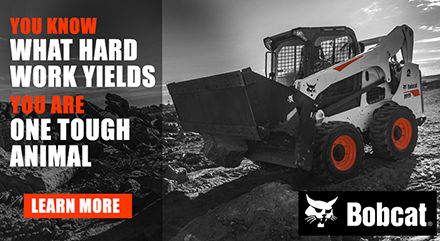
Skid steer loaders are built on four wheels set very closely together. The engine is usually in the rear, just behind the operator's seat in the cab. Two arms run on either side of the cab from back to front and connect to the attachment that actually does the work: a bucket for scooping, forks for moving pallets, a drill for backyard renovation, or any one of dozens of other tools.
The term "skid steer" refers to how the vehicle gets around. Instead of turning like a car, by angling the front wheels to change direction, skid steer loaders turn by driving the wheels on one side of the machine while stopping the wheels on the other. The loader "skids" on the stopped wheels and pivots around them, enabling skid steers to turn completely around within their own length.
Many people use the brand name "Bobcat" in reference to the entire class. While most sellers will know what you mean, it"s best to use the generic terms "skid steer loader" or "skid steer" when talking about these machines. And although the Bobcat Company would appreciate it, there are actually eight to ten significant skid steer manufacturers. So don't get pigeonholed into one just by using the wrong term.
This BuyerZone Skid Steer Loaders Buyer's Guide will give you everything you need to start shopping for a skid steer loader, including attachments, how to choose a seller, and how to prepare for purchase. After you've reviewed all the information, we can connect you with skid steer loader sellers in your area - free.
The first step in finding the machine that's right for your job is to determine the size of the job itself and the terrain.
Skid Steer Purchasing Basics
There are three central considerations related to size you'll need to research before buying or renting a skid steer loader:
- Physical size. This is the first and often primary consideration. It's crucial to measure gates, garages, or any other small spaces your skid steer will need to fit through. Typical skid steers range in width from about 3 feet to over 6 feet, while heights are usually between 6 feet and 7 feet. Knowing your height and width limitations is a very simple way to narrow your choices.
- Dumping height. A second point to address is how high you need the loader to lift. If you need it to fill a 9-foot high dump truck, make sure the model you choose has the appropriate dumping height. This is usually measured as the "height to hinge pin," meaning the pivot point between the arms of the loader and the bucket. It can range from around 8 feet on smaller models to over 12 feet on the largest.
- Lifting capacity. The third and final primary consideration is lifting capacity, commonly known as operating capacity. Unlike physical size and dumping height, you may have a little more flexibility here, based on the needs of your job. As lifting capacity increases, the physical size of the machine will increase as well. The downside to this is: if your primary consideration is access to tight places, you may have to settle for slightly less carrying capacity.
According to Compact Equipment magazine, the most popular size is the 1,750 lb to 2,200 lb range. Generally, anything over 2,200 lbs is considered a heavy-lift skid steer loader. And in recent years, several manufacturers have introduced skid steers with rated operating capacities of almost 4,000 lbs., although businesses that require that much capacity often turn to full-size front end loaders or other heavy equipment.
Tires
The main choices for skid steer tires are pneumatic (hollow rubber tires filled with either air or polyurethane foam) or solid rubber tires.
- Air-filled tires are the best at smoothing the ride on bumpy or uneven surfaces, but you run the risk of getting a flat. They're also the least expensive.
- Foam-filled pneumatic tires are impervious to flats, but are more expensive: they can cost $400 each. In addition, since foam-filled tires are so much heavier than air-filled, they put additional strain on the skid steer's transmission and can lead to breakdowns.
- Solid rubber tires are typically much thinner, so they don't have the weight problems, and also never go flat. However, they do give the roughest ride.
If you plan to use your skid steer primarily on paved roads or smooth surfaces, or if your operating environment has lots of puncture hazards (such as a recycling center with lots of broken glass), solid rubber tires can be a good choice for longevity. For most general-purpose uses though, air-filled tires are the most economical and comfortable choice.
Skid steer alternative
A near relative of the skid steer loader is the compact track loader. Also known as a multi-terrain loader or rubber track loader, it's basically a skid steer body mounted on dual treads - like a tank or bulldozer - instead of wheels. The main advantage of a compact track loader is that treads get better traction than wheels in mud or loose terrain.
Also, because the weight of the loader is distributed across a much larger surface, track loaders often do less damage to the terrain than wheeled loaders.
Overall, track loaders tend to be bigger, featuring more capacity and correspondingly higher prices. As a result, they're generally purchased either as part of a fleet of construction vehicles that also includes skid steers or for applications where they'll be used on loose terrain most of the time.
If you only need tracks occasionally, it's possible to buy conversion kits that fit right over the wheels, allowing you to attach treads to any standard loader.
Evaluating multiple models
Once you've narrowed down your choice to some models that are the right size for your needs, try them out. Evaluate these aspects of each one:
- Comfort. A skid steer loader operator may be in the cab for hours at a stretch. Is the seat comfortable? Are controls easy to reach? Is it easy to get in and out?
- Visibility. Good vision can speed work and reduce accidents. Can you see the edges of the bucket from the seat? Can you see reasonably well to the sides?
- Maintenance. While tough, skid steers do require constant maintenance. How easy is it to access the engine and hydraulic pumps? What is the recommended service schedule like?
Skid Steer Features
Manufacturers have added all kinds of skid steer features to their models in recent years. What used to be a bare-bones piece of equipment now has many options that can make it safer, more comfortable, and more efficient to operate.
One good example is the anti-stall device. Skid steer loaders use the same hydraulic power system for driving as well as manipulating attachments. If the operator tries to do too much - lifting a heavy load while accelerating, for example - the engine will be unable to supply enough power, resulting in a stall. Avoiding stalls used to take skill and practice. But some brands now have anti-stall devices built in that automatically prevent them.
Vertical or radial lifting
The standard skid steer features a radial lift design. The arms are attached to the machine at a single point on each side. As the arms are raised, the bucket moves in an arc, traveling away from the machine as it moves from the ground to the height of the mounting pin, then back towards the machine as it goes higher. This design promotes stability with a full load at high or low elevations.
The drawback to radial lift is that the reach of the machine is lessened. An alternative, called vertical lift, uses a hinged joint to move the bucket out as it rises, allowing the load to move almost straight up and down. Vertical lift gives the skid steer more reach at high lifts, useful when loading dump trucks, refuse bins and similar containers. This feature is also important when routinely using your loader as a forklift.
Cab enclosures
Until recently, most skid steers were only available in an open configuration, with an overhead canopy but no doors or windows, leaving the operator exposed to the elements. Now however, many models are available with an enclosed, heated or air conditioned cab - a welcome feature in extreme climates. Depending on the buyer's geographic location, heating and air conditioning are currently found on about 40% of new skid steer loaders. And in general, every new skid steer with a fully-enclosed cab can be ordered with heat, air conditioning or both - an upgrade that typically adds about $6,000 to the price of each machine.
But this addition imposes a small problem in certain cases: visibility. Skid steer loaders constantly kick up clouds of dust, obscuring visibility in an enclosed cab. To compensate for this challenge, many operators remove the windows during the summer, a relatively simple process as the cab can be removed or reinstalled with relative ease.
An additional feature that coincides with an enclosed cab is defrost. Defrosters are equal to if not more common than temperature regulation and are usually a good idea to promote visibility in an enclosed cab.
Control options
There are two standard control setups for operating a skid steer loader. The traditional setup uses two hand levers, one for speed and direction on the right side and another for the left. It also uses foot pedals to control the curl and lift of the bucket. In contrast, the more common method of control now uses two 360 degree joysticks. One controls the speed and direction of the loader while the other operates the bucket. There are other control variations as well, such as a twin lever setup that incorporates a pivot on each lever to control the attachment, but these fairly rare.
The main reason to choose one style of control over another is personal preference. Operators who are familiar with one system will naturally want to stick with it. The two-handed joystick approach is considered somewhat easier to learn since it doesn't require both hands and both feet. But availability is becoming increasingly one-sided.
Although some people in the industry may feel hand and foot setups are more efficient, all new skid steers are currently sold with joystick-style controls, according to national suppliers specializing in material handling equipment. In fact, most if not all vendors have discontinued the production of the older hand/foot-control models due to lack of interest as well as safety concerns.
Other skid steer features
Manufacturers offer a variety of add-ons that may enhance the safety and efficiency of your loader, including:
- Warning flashers or rotating beacons: an important safety feature for road work
- Lighting (front and rear): makes work after dark much easier
- Overhead displays: conveniently provide information on fuel and oil levels, hours worked, and more
- Suspension seats: smooth out rougher rides
- Push-button quick attach: switch attachments without getting out of the cab
- Rearview mirrors: crucial for crowded operating environments
- Two-speed transmissions: provide more control over the loader's speed
Far more than just an earth-mover, skid steer loaders have the potential to be used for a practically limitless range of landscaping and construction purposes. The next step in your purchase decision is to figure out which tools and attachments could help you get the job done faster, cheaper, and safer.
Skid Steer Loader Tools & Attachments
One feature that makes a skid steer loader such a popular piece of equipment is their ability to use a wide range of different attachments to handle all kinds of jobs. The standard attachment is a bucket - a basic scoop for picking up and hauling loose soil, gravel, mulch, and a wide range of other job site materials.
Other popular attachments include:
- Pallet forks - your skid steer loader can also function as a forklift
- Multi-purpose or 4 in 1 bucket - a "jaw" that opens and closes
- Grapple bucket - has "arms" that can clamp down over the load
- Hydraulic hammers - for breaking rock or concrete
- Brooms - powered, to clean up the job site
- Augers - quickly drill clean holes
- Grapplers - good at picking up larger loose materials (brush or recycling)
- Cold planers - scrape and level pavement
- Angle blades - for pushing and leveling, similar to a bulldoze blade
- Lifting booms - pick up and move heavy objects
- Trenchers - dig trenches of various depths and widths
- Backhoes - a small version of the common digging arm
- Snow blowers and pushers - very popular for removing snow in parking lots and other tight spaces
- Stump grinders - turn tough tree stumps into dust
- Mowers - available in multiple sizes and types
- Rototillers - easily turn over soil for planting
The variety is endless, with some companies listing between 20 to 50 different types. Fortunately, you don't have to make all your attachment decisions at once. It's common practice to purchase the machine with one or two critical attachments then return to buy additional accessories later. You can also rent attachments, which is helpful when you need a specific tool only on occasion.
Most powered attachments connect to the skid steer's hydraulics. However, a few high-powered attachments, such as cold planers and stump grinders, require a high-flow hydraulic system. Not every skid steer loader has a high-flow hydraulic system so be sure to review the power requirements of the attachments you plan to use before purchase.
Universal fit
Almost all attachments are interchangeable among the different brands and models of skid steers thanks to a universal skid steer loader attachment bracket called the "quick attach." Some compact tractors and compact wheel loaders even use the same system, providing the ability to share attachments among multiple machines.
When buying or renting, pay close attention to the attachments specs, as there are a few attachments that are not interchangeable. For example, a backhoe generates so much torque it could rip itself right off the quick attach without additional support. To avoid this, it gets attached directly to the frame of the loader in addition to the quick attach. In these cases, attachments won't work with brands other than the one they were designed for.
Buying a skid steer loader involves more than just choosing the right model and the right accessories. Given the need for routine maintenance and potential repairs, you have to choose a skid steer dealer you can work with for the long-term.
Choosing Skid Steer Sellers
To find the best seller, pay attention to these three cost-saving factors:
- Service-oriented. Ask potential skid steer sellers about their service policies. Find out how they handle breakdowns. Do they come to you for quick repairs? If your loader needs to go into the shop for more extensive work, will they pick it up and return it or do you need to transport it yourself?
Because of the ongoing service needs, it's best to choose a seller located reasonably close to you. But that doesn't mean you have to pick the closest one - just try to find a seller no further than 150 miles away, keeping a round-trip to around half a day. - Proven history. Many construction equipment sellers have worked in the industry for decades. Finding someone who's been in business that long is usually a good indication they'll be in business for years to come and able to support your purchase.
However, not all construction equipment sellers are familiar with skid steers. In some cases, the seller may do more business in full-size wheel loaders, backhoes, and bulldozers, while skid steers represent only a small portion of their sales. Sellers that specialize in skid steers will probably be better informed and more helpful in your decision-making process. - Rental selection. In addition, sellers who do considerable skid steer business are also likely to have a wider variety of attachments in stock and may even be willing to rent them to you.
This relationship comes in handy when you need something like a hydraulic hammer once or twice a year: paying $10,000 to buy one is a waste. So factor skid steer sellers with a good selection of rental attachments into your decision. They'll add considerable value to your purchase.
Finally, don't underestimate personal reactions. Choose a seller who is honest with you and easy to work with. And always keep in mind: saving $1,000 on your initial purchase is insignificant compared to the ongoing costs you'll incur over the years.
So instead of focusing solely on that initial price, concentrate on establishing a relationship with a seller who has the potential to add value to your purchase throughout the life of your loader.
Before you get on the phone with a seller, you should know exactly what to pay. We've compiled the pricing data below through other BuyerZone customers from around the country. It even includes tips on how to get the most affordable skid steer rentals.
Skid Steer Pricing

Pricing for skid steers is fairly consistent across brands and vendors and is mainly determined by the operating capacity. The overall range, from the smallest 650 lb machines to the 3,000 lb monsters, is around $12,000 to $55,000.
But we can break it down in a little more detail.
- Less than 1350 lb. capacity = $17,000 to $20,000
- 1600 lb. capacity = $18,000 to $22,000
- 2000 lb. capacity = $22,000 to $28,000
Want to see more real-world prices? See what other BuyerZone users paid for Skid Steer Loaders.
Heavy-lift skid steer loaders (over 2,200 lb. capacities) get considerably more expensive, usually over $33,000 and up to $55,000. In addition, compact track loaders are considerably more expensive, with tracked machines ranging between $30,000 for the smallest units all the way up to $98,000 for larger models.
As with most types of heavy machinery, there is a definite correlation between cost and quality in skid steers. Proven, reliable brands tend to cost a little extra. Most sellers carry multiple brands, so it's worth comparing, but paying a little extra for more reliability is often worthwhile.
In many cases, renting for a month is the best way to evaluate a skid steer loader before you buy it. As a point of reference, monthly rental costs for a 1,600 lb. capacity skid steer are around $1,100 to $2,000, excluding taxes and a damage waiver. Certain sellers will even let you deduct some or all of the rental cost from the purchase price should you decide to buy.
Skid steer attachment prices
In addition to the skid steer, you'll need at least one attachment to do the actual work. Attachments vary widely in price. A basic bucket usually only costs $700 to $1,200, with specialty buckets like the 4-in-1 costing anywhere from $3,000 to $4,200. Other low-end attachments like pallet forks and augers typically range from $700 to $2,400. Trenchers, rotary mowers, power rakes, and sweepers fall into a $1,200 to $9,100 range.
Complex powered attachments such as hydraulic hammers, flail mowers, backhoes, and cold planers can cost almost as much as the skid steers they connect to. Expect to pay $10,000 to $24,000, depending on their size. A small percentage of these high-end attachments require high-flow hydraulics, adding about $2,000 to the price of both machine and attachment.
The cost of adding a cab enclosure and heating or air conditioning is usually between $1,500 and $6,000. Adding rubber tracks can cost around $5,000.
Warranties
You can expect at least a one-year parts and labor warranty on new skid steers. As with cars, you may get longer warranties on some subsystems: two or three years on the powertrain, for example. And you'll often be able to extend the warranty at additional cost. If you have equipment maintenance facilities and personnel already, skip it. Otherwise it's definitely worth considering.
New vs. used
Most skid steer sellers sell both new and used equipment. While you can save quite a bit of money buying used, it's not worth the risk if you're going to be using the machine full-time. Used machinery is often out of warranty and may have been used roughly by its previous owner, leading to costly repairs and downtime for you.
If you'll only be using it part-time, you can find some great deals. A mid-sized skid steer that sells for $20,000 new will probably sell for around $14,000 to $16,000 used or less. A good benchmark to look for is a machine that has 1,000 to 2,000 hours of use - that's enough to drop the price while still getting a machine with a long lifespan ahead of it. There are plenty of used skid steer loaders with only 200 to 500 hours of usage, but that's typically not enough to drop the price significantly, which cancels out the primary reason to buy used in the first place.
In addition to their reduced cost, used skid steers currently have another major benefit: environmental compliance - or rather, an exemption from it. The EPA's Tier IV directive, regulating engines for non-road diesel engines, attempts to curb pollution by forcing manufacturers to produce refined engine and fuel controls. However, this regulation only applies to machinery manufactured after Jan. 1, 2013 and doesn't affect the continued operation of machines produced prior to that date.
But before taking advantage of this loophole, it's a good idea to review the specific regulations associated with your job. According to industry insiders, many job sites are starting to require mandatory Tier IV-regulated machines - a trend that is expected to increase as time goes on. Because of this, the value of older machines has dropped and should continue to do so as Tier IV regulations are enforced more widely.
Skid Steer Buying Tips
Get in it. Many sellers have a "tow and show" trailer they use to bring a demo model for you to try out. This provides a good sense of the machine's characteristics and lets you see whether it fits your operation.
Keep up the maintenance. Skidsteers require some attention to detail: prompt hydraulic fluid and oil changes are a must. If your skid steer gets constant use, it can even be worthwhile to exceed the maintenance schedule.
Know the extras you want. In an industrial setting, where the loader will be shuttling back and forth constantly, you'll want to be pickier about the controls. Landscapers often prefer a little extra reach on their machines. And for general construction, extra power is always a plus.
Choose attachments wisely. Most skid steer owners spend the bulk of their time using one or two attachments. Don't go overboard and buy everything you might need. Remember you can rent attachments for a day, week, or month as needed. If you find yourself renting the same attachment repeatedly, you can always purchase it later.