
Buyer's Guide
Introduction to Steel Buildings
Using metal as a building material is nothing new - iron beams first made modern skyscrapers possible. Buildings made entirely of metal have been cropping up across the country for 60 years since the Quonset hut was invented during World War II. However, until the end of the 20th century, most of these steel buildings were garages, airplane hangars, barns, and warehouses.
Today, modern building materials, insulation, and finishing options make steel buildings a better choice for many types of buildings such as churches, retail stores, manufacturing plants, sports arenas, and offices. Their primary advantages over traditional construction - that they are cheaper and faster to build - stem from the fact that much of the work is done at a factory that fabricates the component parts of the building.
Whether your business needs 10' x 20' sheds or 150' x 300' manufacturing facilities, steel buildings might be the best choice. However as with any construction project, there are some complicated decisions to make and potential pitfalls to avoid. This BuyerZone Buyer's Guide will explain the process and help you get the best steel building for your business.
It's important to be aware of the unique benefits available through a commercial steel building. They can save you thousands in comparison to traditional construction.
Steel Building Process and Benefits
The benefits of a steel building come from the construction material itself (steel) and how the structure is built. The combination of metal construction and pre-fabricated components provides three main advantages:
- Cost. Because the labor to put up your building is drastically reduced, you can save 30% or more over more traditional construction methods.
- Speed. A finished steel building can be operating in 60 to 90 days, instead of 6 months or more.
- Dependability. Without requiring repainting or other maintenance, steel buildings are guaranteed to last 30 to 50 years, depending on the manufacturer.
- Environmental. Today’s business market is turning to steel as the choice of construction material because steel buildings are environmentally friendly. Steel does require a lot of energy to create, but it is easy to recycle -- and because it costs so much to manufacture, steel is the most recycled material on Earth.
- Reduced insurance. Insuring a steel building is significantly less expensive than wood or brick construction.
- Durability. Steel buildings are non-combustible, non-contractual (swells, shrinkage, leaks) from climate changes, and pest-resistant (termites don’t eat them).
As with any construction project, your first step is the planning stage. This section covers some of the legal considerations and zoning requirements to be aware of and wraps up by giving you a basic outline of the building process from start to finish. Plan accordingly.
Planning for Your Steel Building
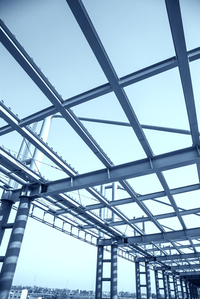
There are two major factors that will influence the design and construction of your steel building. One is practical, the actual use of the building, and the second is legal.
On the practical side, you need to think through exactly how you'll use the building. For example, if you're building a warehouse, you may need roll-up doors high enough for your forklifts to drive through. Steel buildings always require foundations, which in most cases are flat concrete slabs.
As for legal considerations, every state has different building codes that will apply to your project. These will include things like snow load and wind load and how much your building can withstand each. It’s imperative to remember that building codes are continually changing, so check with your city or council planning department. For instance, if you’re building a church or emergency vehicle garage, extra “importance factors” may apply and push the code requirements even higher.
Other legal requirements include local zoning laws, drainage requirements, and energy codes. Stricter energy codes require more insulation to save energy and “go green” to reduce your building’s carbon footprint. Insulating properly will make your building energy efficient and it will pay for itself in the first year with reduced heating and cooling costs.
Some aspects of your design involve both practical and legal considerations: for a retail facility, appropriate parking and handicapped access fall under both categories.
While steel building suppliers can often help you research these codes - most won't ship you a building that doesn't meet codes in your area - the ultimate responsibility for meeting them is yours. If you're not familiar with major construction projects, it’s advisable to consult with a local contractor.
Although building codes generally don’t change very quickly, some lawmakers are discussing whether to base the codes on a 10 year period, rather than the usual 100 year weather cycle, in reaction to the ever-changing weather patterns over the past few years. Building codes are intended to provide for the safe use of buildings and structures under "normal" conditions when it comes to snow load, wind speed, earthquake, collateral load and exposure, but the definition of “normal” seems to be changing more rapidly than codes allow for.
Outline of how a typical steel building project progresses:
- Design. Before any work can proceed, you need to specify the size and shape of the building, the type of roof and interior walls you want, the number and placement of doors and windows, and any façade or other cosmetic enhancement.
- Engineering. Once the basic design is complete and you've paid a deposit, an engineer needs to create the specifications and blueprints for the building. The blueprints will specify what materials should be used and what loads the building will need to be able to withstand to meet local building codes.
- Fabrication and delivery. After the blueprints are signed off on, actual production begins. The beams, posts, girders, side and roof panels, and even the fasteners to hold the building together are all produced at a factory, then shipped to your construction site. The parts are pre-cut to the exact dimensions you need, pre-drilled, and ready to be bolted together. This step can take 3 to 6 weeks.
- Sitework. While the components are being manufactured, the building site can be prepared. steel buildings require foundations, which are usually poured concrete.
- Construction. Once the components arrive and the foundation is ready, the actual construction can take place.
- Finish work. Insulation, interior walls, exterior finishes, doors, windows, steps, plumbing, are all added to turn a metal box into a building you can appreciate.
- Walk-through. Like any construction project, your steel building needs to be approved by a building inspector once it is completed.
After you've determined a workable construction timeline and gathered info on the required permits, your next step is to choose between the two basic types of commercial steel buildings.
Steel Buildings Design Choices
Commercial steel buildings come in two main designs: arch style and red iron steel (aka rigid frame style).
Arch style
Arch style steel buildings (aka Quonset huts) became popular during World War II. They are built from a series of interlocking metal ribs that form the roof and sides of the building.
Arch buildings are mostly used for storage buildings, garages, and sheds. Small arch style buildings are popular among do-it-yourselfers as their construction methods are simple and they are less expensive per square foot. They are not very adaptable or customizable, however. Their construction only allows for doors and windows in the endwalls, not the sides, and the overhead clearance drops considerably as you get further away from the center of the building.
Red iron steel
The primary type of steel building used for commercial and industrial applications is the red iron steel building. These are constructed with steel skeleton framing and flat steel panels for the roof and walls. They can include doors and windows in any wall, and are expandable. Churches, airplane hangars, mini storage, retail spaces, and office warehouses often opt for red iron steel buildings
While they are still much easier to build than traditional buildings, more expertise and equipment is required to construct a pre-engineered red iron steel building than an arch style building.
Pole barns
An additional type of building often produced by the same manufacturers is the pole barn. Pole barns are simple buildings that use steel framing, but feature wood floors and/or walls. They are primarily used for agriculture. Note: most of the topics addressed in this Buyer’s Guide apply more to arch style and rigid frame buildings.
How big do you need it?
One of the advantages of commercial steel buildings is the huge open spaces they can easily contain. However, try not to get carried away: the bigger the building, the more it will cost you. The first consideration about size, of course, is usage. Whether the building is going to contain shelving units, parking spaces, pews, or offices, you should carefully plot out a desired floor plan to determine the height and width you need.
A large majority of steel buildings are single story, but they can be built with two or three floors if your application calls for it.
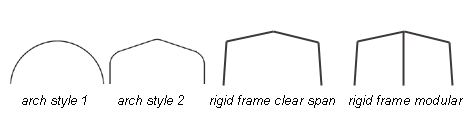
You also need to decide if you can live with interior columns or not. "Clearspan" buildings - those without any interior columns - can be up to around 150' wide. However the wider they get, the more weight the frame has to support and the more expensive the building becomes. In "modular" commercial steel buildings, width is nearly unlimited - over 1000' is possible - but you'll have a series of metal columns inside. (Note: the term "modular buildings" also refers to an entirely different type of construction in which smaller, more finished buildings are completely produced in a factory then shipped to their destination.)
No matter which type you've selected, there are a number of size options available, not to mention an array of convenient add-ons and upgrades that can turn a simple building into a multi-functional shop.
Steel Building Sizing
Height
There are two aspects to your steel building's height: overall height, measured on the outside, and interior clearance. The overall height may be regulated by zoning laws, but the clearance height will usually have more of an impact on your design decisions.
At the low end, 10' clearance is plenty for many applications. Heights of up to 30' can accommodate extensive warehouse shelving systems, heavy construction vehicles and tractor-trailers, or even airplanes - but of course you'll pay more for additional clearance.
Roof
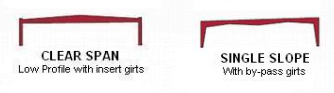
Rigid frame steel buildings can come with several types of roofs. "Single slope" construction starts with one side wall higher than the other, and the roof simply slants from the high wall to the lower. "Peaked" or "gable" roofs have a more traditional peak, with the roof running down to both sides.
You may be able to choose the pitch of your roof, as well. Pitch is usually expressed as a ratio: 1:12 is the flattest type of roof, rising 1" for every 12" of width. 4:12 is usually the steepest pitch available for steel buildings. Increased pitch gives you more interior clearance, helps improve the building's ability to shed rain and snow, and can result in a better looking building. But also increases costs.
Arch style buildings have no distinction between roof and walls - their curved sides act as both at the same time. Some arch style steel buildings come to more of a point at the top, while others are uniformly curved, but generally they have fewer options than rigid frame buildings.
Extras
Unless your steel building is going to be an unoccupied storage building, you will need insulation. More stringent energy codes require additional insulation now. The same rating system used in residential construction is used for commercial steel buildings: R-7 is equivalent to 2” of insulation, and R-19 is 6”.
The minimum insulation for roof is R-19 (equivalent to 6 inches) and wall is R-13 (4 inches), up to a maximum of R-38 in the roof (12 inches) and R-19 (6 inches) in the wall. Even though the increased insulation is more expensive initially, the savings in your energy bill will make up for the cost within a year. You may also want to install a vapor barrier for the roof and walls, which prevents condensation.
Other important extras include "walk doors" for pedestrians, various types of vehicle doors, windows and skylights to let natural light in, and gutters and downspouts to manage runoff. Be sure to inquire about the insulation value of the doors and windows: look for double-pane glass and insulated doors. Use BuyerZone's free steel building seller comparison service to learn more about the add-ons you can order.
On the West Coast, many buyers choose to include solar panels on the roof of their buildings. These may require more steel material to support their weight, but they are eco-friendly and can reduce energy costs.
The final set of add-ons for your building are cosmetic. At a minimum, you'll be able to choose the exterior color of your building. If appearance is important, you can choose more expensive finishing options such as complete façades of wood, brick, or stucco. These options are less common, but very important to some buyers. Interior walls or partitions to make offices are built by your construction contractors, not the steel building manufacturer.
How to Buy Prefab Steel Buildings
There are three major ways to purchase prefab steel buildings:
- General contractors (GCs) are the people who will actually construct your building. Typically a GC will get a general idea of the type of building you need, talk to a broker or several manufacturers, then present the options to you. In some cases, a GC may have a preferred manufacturer that they will always turn to. This is generally the simplest way to get the job done.
- Brokers work with multiple factories. Like GCs, they will consult with you to determine your needs, then provide a proposal based on the manufacturer who can best meet your needs. However, their involvement ends once the pieces are shipped. You’ll need to set up the building yourself or hire a GC.
- The manufacturers who actually create the component pieces do sell directly to customers in many cases. They will build and ship the building based on existing specifications you choose from, or can work with you to design a more customized building. Once again, you must oversee the building construction.
Because of their experience, GCs are a better way to go if you’re not familiar with planning and managing construction projects, especially if you have a GC who you work with on a regular basis and who understands your business.
Brokers have more expertise with steel buildings and may have connections with multiple manufacturers. These relationships can help you save money. They can often help you find the best deal, and can put you in touch with qualified contractors in your area if you do not have one.
If you have more experience with building projects and know exactly what you want, you may be able to save money by going directly to a manufacturer. Cutting out the middleman also eliminates potential finger-pointing at later stages if anything goes wrong. Buying direct can be a good option if your project is small-scale, such as an arch-style steel structure you're planning on erecting yourself. Otherwise, you can compare BuyerZone's steel building sellers to learn more about how steel building projects are handled.
When it comes to choosing between a contractor and supplier, it's 50/50. The fact is that most buyers only want to deal with one company to simplify communications.
Once you've determined which of the three channels to buy from, your next step is to select from a group of sellers within that channel.
Evaluating Steel Buildings Sellers
The selection of a prefab steel building supplier is important. Unfortunately, some less-than-reputable players have tainted the market with aggressive sales techniques, inserting deceptive language into contracts, and quoting prices on a building that don't meet the building codes in a particular area.
Watch for sales tricks
High-pressure sales pitches are problematic in this industry. In the course of talking to brokers and manufacturers, you may hear tired old sales clichés like "This is the last one on the lot" or "Another customer just cancelled an order for a house just like the one you're interested in. I can sell you their components cheap if you sign today", and other pitches designed to get you to "act now!"
Most of the time, these "opportunities" are simply untrue. A major prefab steel building manufacturer recently got into legal trouble for misleading sales practices like these. Do not fall for them; legitimate good deals will be there tomorrow, too.
Another example is the "left over" sales pitch. If a salesman tells you that he has a steel building left over in a design similar to the size and style you're looking for, don't believe it. Each building is designed for a particular job with a special design.
Building to code
Reputable manufacturers and brokers do not want to sell you substandard buildings, so they often maintain databases of current building codes nationwide. However they won't usually depend on that information.
The best way to proceed is to have the manufacturer or broker list the codes your building has been specified to meet in your contract, then verify those figures with your local officials before you sign the contract. A supplier who wants you to sign a contract before you verify the specs independently isn't someone you should do business with.
How to investigate
Here are some questions to ask of potential suppliers:
- How long have you been in business?
- Do you provide engineer-certified blueprints?
- What kind of guarantees do you offer on your prefab steel buildings?
- How long will it take you to create and deliver my building? (This one is useful if someone pushes a "closeout special" on you - if it is already on their lot, they should be able to deliver it in a couple of days.)
- How do you ensure that my building meets the building codes in my area?
- Do you have a specialty? (Some companies focus on larger buildings, over 50,000 square feet; others may focus on hangars and garages as opposed to retail and other commercial buildings.)
It is worth checking with the Better Business Bureau in the supplier's area to find out if any complaints have been lodged against them.
It's recommended to ask the seller for customer references. Even better, if the seller can provide local references, you can view the buildings for yourself.
When checking references, ask the following questions:
- How long have you been a customer of theirs? How many prefab steel buildings have you purchased?
- Would you buy from this seller again?
- Are their deliveries complete and on time?
- Did you get the right building for your application?
- What could the seller improve about their operation?
One more thing to consider before you sign on the dotted line: cost. We’ve compiled a variety of pricing data for commercial steel buildings from a wide variety of BuyerZone customers to make sure you don't overpay. Remember, everything is usually negotiable. So keep this in your back pocket when talking to a seller.
Steel Building Prices
Estimating steel building prices can be complicated, because there are a large amount of variables that go into each project. Local building codes have a big impact on steel building prices: a building in Denver has to be capable of a handling a huge snow load, so it requires significantly stronger components than a building in New Mexico. And extras like insulation and interior panels can make a big difference. See what other BuyerZone users received for steel building prices.
With the economy fluctuating, it's difficult to guarantee a price quote will stay the same over a period longer than six months. Raw material prices drastically went down in 2008 and are now rising.
That said, a typical price for basic rigid-frame steel buildings is between $12 and $20 per square foot. This includes materials, delivery, the foundation, and construction. A more finished building may be closer to $20 to $30 per square foot, and extensively customized buildings with brick facades, unusual shapes, or complicated construction can reach $40 per square foot or more.
Materials alone can cost $5 to $15 per square foot. This varies according to size: small buildings cost more per square foot. Materials for a 250' x 120' church building might cost $240,000, or $8/sq ft, while a 20' x 20' garage might cost $6,000, or $15/sq ft.
Foundation costs are fairly standard, usually $4 to $7 per square foot for poured concrete. Remember that GCs may include this cost in their proposals, but brokers and manufacturers of steel buildings definitely will not.
Labor costs will vary widely depending on the size of the project but can range from $2 to $6/sq ft. These costs will be charged by the hour, so increased complexity will drive them up considerably. With today's economy, businesses are competing harder than ever, so you may labor costs even lower.
Insulation will add thousands of dollars to the cost of a larger building – but as mentioned previously, is a worthwhile investment. It will improve the resale value and soundproofing of your building, save energy costs, and meet new energy codes.
Contract tips
You'll be asked to sign a contract that details the design loads and specifications for the building. As with any major business purchase, you should inspect the contract very carefully before signing it. Here are a few things to look for:
- Substitution clauses. Manufacturers may try to give themselves the right to use different materials if those specified are not available. The idea is sound, but is often used to substitute cheaper materials for those you wanted. Make sure any changes are "equal or greater value" and must be approved by you.
- Specifics. The more specifics in the contract, the better. The contract should not just list a "10 x 10 overhead door" - prices range from $250 to $1200 on such doors. The contract should list brand names and model numbers, insulation values, locks, coatings or paints, and more. This is another way unscrupulous sellers may try to stick you with lower-quality materials, so make sure every component is detailed in the contract.
- Responsibilities. Since brokers, GCs, and manufacturers play different roles in the process, make certain the contract spells out exactly who is responsible for each phase of the project: design, engineer's specification, fabrication, delivery, construction, and inspection. Learn more about the various service levels that steel building providers can offer.
Steel Building Buying Tips
- Do not pinch pennies. If you're spending tens of thousands of dollars, a difference of $500 here or there is not significant. The building is going to last 30 years or more, so make sure you get the building you want.
- Look closely at good deals. When two sellers present bids for similar steel buildings that are thousands of dollars apart, you should investigate the details thoroughly. Chances are that one is not including everything you need.
- Know the right time to buy. Steel buildings often follow a seasonal trend. Buying when sales are down will help you get the best price. Sales are typically slow in the winter and summer, and salesmen are more likely to take less of a markup just to make a sale.
- Verify the building codes. We cannot stress this enough: make sure you get in touch with your local building officials once you have specifications from your supplier, but before you sign the contract. Changes to meet code will always drive your costs up, so to avoid late surcharges, you need to verify that the contract includes all the right specifications.
- Get it in writing. Some manufacturers may ask for a verbal go-ahead to "get the factory working" or to "lock in this price." This is never a good idea. Getting the details in writing will ensure that you know exactly what you're buying.
- Buy from an accredited manufacturer if possible. The I.A.S. (International Accreditation Service) certifies manufacturers. Purchasing from an accredited manufacturer can give you extra peace of mind that your building will be designed to the highest standards in the industry.