
Buyer's Guide
Introduction to Ultrasound Machines
Few pieces of medical imaging equipment are as valuable and versatile as the ultrasound machine. While patients typically associate ultrasound technology with the monitoring of fetal development, practitioners know ultrasound is critical to diagnosing a plethora of health problems, including blood clots, tumors, and artery blockages.
Because an ultrasound machine (also called a sonogram machine, or echocardiogram machine) works by sending high-frequency sound waves, not radiation, through the body, the procedure is the safest and most affordable imaging option available. In fact, ultrasound is becoming so ubiquitous that some speculate it could be the stethoscope of the future.
Any medical professional who wants to quickly and accurately diagnose illnesses and potential medical conditions in their patients, might consider purchasing an ultrasound machine. The question quickly becomes not “why purchase an ultrasound,” but “which one and from whom?”
This BuyerZone Ultrasound Machines Buyer's Guide will help you prepare you for a smart purchasing by detailing the benefits of owning an ultrasound machine, different ultrasound machine features, how to evaluate ultrasound sellers, and how much you can expect to pay.
Once you have all the information you need, you can submit a free request for ultrasound machine price quotes. It's quick and easy, and we'll match you with up to six qualified sellers in your area.
Unlike MRIs or CAT scans, ultrasounds are just as reliable for many applications and routinely relied upon by the medical community to diagnose a wide range of illnesses - now even integrated into veterinary services.
Ultrasound Equipment Benefits
Ultrasound is one of the quickest and most reliable ways diagnose serious medical problems in a patient early on. From neurology to podiatry ultrasound offers a non-invasive way to view the body’s internal structures. Ultrasound has the added advantage of being more affordable and more portable than MRI or CAT scans.
Basic ultrasound equipment typically renders two-dimensional black and white images called sonograms. Newer technology includes three and four- dimensional ultrasounds, with 3D providing static images, and 4D being in real time. 3D and 4D and have become near-standard in obstetrics, and they’re growing as a diagnostic alternative to MRI or CT scanning in all specialties. Meanwhile, color Doppler ultrasounds are used in cardiology, vascular surgery, and other specialties where it’s important to see the flow of blood through vessels.
How ultrasound equipment works
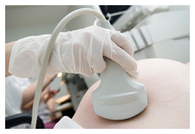
A professional ultrasonographer uses a probe called a transducer to locate internal structures, such as a fetus, organ, or blood vessel, by pressing it against the body or inserting it into an orifice. Transducers are available in a variety of shapes and sizes to provide different fields of view, sound penetration depths, and image resolutions.
The transducer creates high-frequency sound waves, which are sent through tissues and vascular areas. The waves reflect back to the transducer and the machine creates an image based on the speed at which the echoes return. The operator can adjust various characteristics of the image, take measurements, and record the images for later examination.
Diagnostic ultrasound machines benefits
As with any major purchase, it’s important to understand the benefits that a diagnostic ultrasound machine affords your practice.
- Accurate diagnoses: Ultrasound is effective for pinpointing problems in almost any body part. It also gives physicians a high level of confidence in their diagnosis.
- Multifunctional: You can typically use the same diagnostic ultrasound machine to examine a fetus, internal organs, or muscles and other soft tissues.
- Inexpensive: It costs less to own and operate an ultrasound machine than most other diagnostic health-care equipment, such as an MRI.
- Non-invasive procedure: Ultrasound may be performed without entering the body or puncturing the skin.
- Minimal risk: Sonogram waves don’t emit harmful radiation, so they’re generally safe to use on most patients.
- Durable: Well-maintained ultrasound machines can last five, 10, or even 20 years. In addition, they maintain their resale value.
- Facilitates healing process: Since an ultrasound can diagnose problems quickly, medical professionals can focus on getting the patient well.
- Profit center: Each sonogram you perform costs a few hundred dollars; the more patients you see, the quicker the machine can pay for itself.
- Health insurance approved: Health insurers easily reimburse ultrasound procedures because it saves them from having to pay for more expensive procedures.
Your next step is to become familiar with the various components of an ultrasound machine, as well as a few of the standard features you can expect to find. Knowing exactly what the system includes will speed up the process when you talk with a seller. It also ensures you get additional functionalities necessary for your specific practice.
Ultrasound Devices and Applications
The ultrasound machine you purchase should come equipped with all the software, calculations, and presets you need. When choosing the device that is right for you, focus your search on those that are well suited for your area of expertise.
An OB/GYN, for example, will want ultrasound devices with the best real-time scanner to see a constant image of the moving fetus and monitor fetal heartbeat and growth patterns. A cardiac specialist, on the other hand, will be more concerned with high-quality, low-frequency transducers to get the clearest images of organs deep in the body, such as the lungs or heart. And an ultrasonographer examining a blood flow problem or an artery blockage will want a machine that produces the clearest on-screen image to help locate and attend to the problem.
A qualified ultrasound seller should be prepared to help you determine what machine is best suited to your individual practice.
Standard diagnostic ultrasound components
- Central processing unit (CPU) - The CPU is the "brain" of ultrasound equipment, controlling the emissions and rendering images by calculating the speed and distance of the echoes.
- Transducer probes - Devices that produce the sound waves used to examine the fetus or body part. Transducers are available in different shapes and sizes that offer varying levels of penetration depth, wave frequency, and image resolution.
- Pulse controls - These allow the ultrasonographer to alter the frequency and duration of the sound waves.
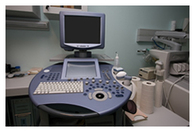
- Display - The monitor that shows the processed image. Available in black and white or color and in sizes ranging from 15-21 inches.
- Input devices - Built-in keyboards and trackballs that allow you to enter and manipulate data and take precise measurements. There are also touch-screen controls available.
- Printer - Produces hard copies of a sonogram for doctor's records and patients (typically expectant mothers who want to show it to family and friends). Thermal printers are less expensive but produce less-detailed images; high-quality printers can substantially increase your costs.
Data storage
When it comes to data storage, most Ultrasound machines come equipped with substantial hard drives; however, this is not the most efficient way to store your images. Your data storage options include:
- Networking your ultrasound to an on-site server.
- Storing images in your electronic medical records system.
- Using a web-based image management system.
Standard ultrasound features
Ultrasound machines are flexible enough to help diagnose almost any abdominal, cardiac, vascular, or musculoskeletal problem. Here are some of the applications ultrasound equipment affords your practice:
- Doppler technology - Determines the frequency of sound waves to help you listen to the heart, determine blood flow, and create blood flow images on the monitor
- Stress testing (or stress echo) - Monitors the heart to see how it responds before, during, and after exercise
- Tissue harmonics - Reduces artifacts that appear on ultrasound images by improving amplification of high-frequency sound waves
- Contrast imaging - Uses a contrasting agent that's injected into the patient's bloodstream to gauge blood flow
- Multi-directional transducers - Allows you to view organs in different directions and helps reduce artifacts in the images
- Remote diagnostics - Lets technicians easily diagnose certain equipment problems remotely and repair them completely online
The amount you'll spend on an ultrasound machine will be dictated by the specialized functions you need it to perform. So make a comprehensive list of what you intend to use it for, including any software integrations that may be necessary for compatibility with your EMR system.
Evaluating an Ultrasound Machine for Purchase
The first thing you need to consider when shopping for ultrasound machines is how you plan to use it. Make sure you have the right system based on your practice and the ailments you want to investigate. Ask yourself:
- Do I need to examine organs deep within the body? (Higher frequencies can achieve higher resolutions, but do not penetrate as deeply into the body.)
- Will my patients benefit from 3D or 4D imaging?
- Do I need color Doppler to evaluate blood flow?
- Do I need a machine that is portable? If so, how portable? (Ultrasound machines come as small as mobile phones, but smaller sizes mean less power.)
If you’re not sure what you need, speak with other doctors in your field. Ask what they are using and what they do and don’t like about it. You can also read reviews of specific ultrasound machines online.
After purpose, your next consideration should be budget. Be sure you know what kind of investment you are prepared to make before you meet with an ultrasound machine seller.
To come up with a baseline budget, start by estimating how many ultrasounds you will perform each month. Now, multiply that by your expected reimbursement per ultrasound. Next, decide how soon you’d like to break even on your purchase (in months) and multiply that number by your expected monthly reimbursement. That is your target budget.
Typically, only large hospitals or practices that see hundreds of patients per week need the largest and best equipment. Standard ultrasound machines without many frills are more than sufficient for most small-to-medium sized practices.
Fortunately, prices have come down as more brands and newer technology enter the market. There is no need to restrict yourself to just one manufacturer. There are many reliable ultrasound machine manufacturers who offer quality equipment. So focus more on the features and image quality you want than the name on the side of the machine. Besides, an ultrasound machine can last 10 years or more and hold its it’s value well, so you should have no trouble finding a very reliable machine at a very reasonable price.
Software and compatibility
Technological advancements have sped up patient care by making it possible for ultrasounds to transmit images to radiology, medical records, or anywhere else they need to go--often wirelessly. But in order to take advantage of this convenience it is vital that the equipment and software you choose be compatible with your office PC and software -- particularly your Electronic Medical Records (EMR) system.
Until recently the standard image format for all ultrasound systems was DICOM. However, many EMR systems do not recognize DICOM (in the same way that Windows typically doesn’t recognize Macintosh files). Manufacturers have found ways to work around this, but be sure to tell your seller what EMR software you are using so you can work together to find the right solution.
Questions to ask your seller:
- Will the software seamlessly communicate with my medical practice software, electronic medical record software (EMR), or picture archiving and communication system (PACS)?
- Does the ultrasound machine work with the operating system I use in my office? (Windows, Linux, Apple OS?)
- Can I perform diagnostic testing on the machine without contacting the seller or manufacturer?
Finally, image quality is always a key concern. Ask your seller to provide sample printouts of ultrasound images, or better yet, let you view an ultrasound procedure in person to determine if the machine offers the quality you need.
Used equipment leasing
If your practice is on a tight budget, two options can help you save money:
- Buying refurbished ultrasound machines
- Leasing
Buying refurbished equipment is a great way to save 20% to 50% off the price of a new machine. Dealers typically get pre-owned equipment from hospital trade-ins, expiring leases, and demo models from major distributors. They then clean the machines and replace any broken or worn parts so they work as good as new. After fixing the machines up, sellers can sell them at a discount.
When buying a pre-owned ultrasound machine, be careful to examine the machine thoroughly. You don’t want to buy anything with problems such as cracked transducer lenses, frayed cables, outdated software, or archaic peripherals. Poorly serviced or mis-calibrated ultrasound machines can cause injury to operators and patients and will cost you more money in the long run.
Some medical practices prefer to lease equipment like ultrasound machines when they don’t want to make a large up-front investment. When the lease expires, you can upgrade to a newer model or purchase the machine outright for a nominal fee. Whether you lease a brand-new machine or one coming off an expiring lease, you’ll be able to get the technology you need and keep cash on hand for other purchases.
While you don’t have to come up with the cash immediately, understand that you’ll pay more for the equipment in the long run. However, you can typically write off your leasing expenses on your taxes. Just make sure to consult with your accountant before making any tax decisions.
Choosing an Ultrasound Machine Seller

The ultrasound machine market is comprised of multiple sellers. Equipment manufacturers typically sell directly to the largest hospitals and health-care practices, while certified distributors, brand-exclusive sellers, and brokers typically handle requests from any size practice.
Regardless who you decide to work with, your top priority should be finding sellers who firmly stand behind their products. Since you'll likely use your ultrasound machine regularly, you should be confident that it will operate properly when you need it. Make sure you get a warranty of at least one year that includes quick response times, on-site repairs, and all parts and labor.
Additional factors to look for in a seller
Look for a company that has been around a long time and has a lot of experience working with practices like yours. It's usually a strong indicator that they keep customers happy. But don't disqualify potential sources just because they're new - a business that has been around for only a few years could be just as dedicated and have a strong reputation with customers.
One way to decide is to find out which companies other physicians bought from. Ask colleagues which ultrasound machine they purchased, who sold it to them, and if they were happy with the purchase. In addition, a reputable seller will be quick to furnish you with references from businesses they work with. While they'll likely provide a list of their best customers, you can still get valuable information from them.
As with any major purchase, getting immediate customer service is critical. Look for a seller who provides multiple contact methods if you have a question or problem at any point in the day.
If you already own an ultrasound machine and want to upgrade, look for sellers who accept trade-ins. In addition to providing a discount towards a new purchase, it's also a sign of good faith from sellers to show they want to work with you. Even sellers who are unable to resell a machine may be able to donate it to a local health clinic or overseas organization that needs but can't afford an ultrasound machine.
Think about the level of training you need to properly operate the equipment. If you, or your ultrasonographer, are familiar with the technology, you may not need more than a basic review of features on the day of delivery. Otherwise, you and your entire staff may be better candidates for training over several days, which is more comprehensive but also more expensive.
You’ll want to work with a knowledgeable seller who will work with you to find the right machine for your practice. Avoid any seller who seems intent on selling you whatever they have on hand.
Buying used ultrasound machines
You can buy used ultrasound machines from medical supply stores, hospitals, and medical centers looking to upgrade, and even from classified ads, but these sources won't provide support if anything goes wrong.
If you decide to buy used equipment, it's critical to examine the machine in person. Ask to see the machine in action so you can look for any shortcomings. You may want to bring your most experienced ultrasonographer with you to get a detailed evaluation.
Any refurbished machine you buy should come with a warranty that protects your purchase for a minimum of 60 to 90 days. Avoid any seller who offers equipment "as is" - an ultrasound machine is too critical to your practice to risk a costly breakdown.
Another aspect to consider when comparing ultrasound sellers is the maintenance agreements they offer. These aspects of service can dramatically extend the life of your machine and ensure its continued accuracy through regular maintenance. Here's what to look for in the best maintenance agreement, and where you can potentially save money on parts and peripherals.
Understanding Maintenance Agreements
An ultrasound machine is only useful to your practice if it's up and running, so it's important to consider a maintenance agreement (sometimes called an extended warranty) as part of your ultrasound machine purchase.
Maintenance agreements help limit downtime and avoid expensive repair costs after the manufacturer's warranty expires. If your equipment needs repair, a maintenance agreement ensures that a technician comes to your office and either fixes it on site or arranges to send you a new machine. Some sellers will even provide a loaner ultrasound machine under a maintenance agreement so that you can continue tending to your patients during a repair.
A maintenance agreement does more than cover the cost of parts and labor on a repair. It provides regular cleaning and preventative maintenance of the machine to ensure that it runs smoothly and effectively. It also enables the sellers to upload software upgrades to your machine.
Maintenance agreement providers
There are two different sources to turn to for maintenance agreements - each with its own benefits and disadvantages.
- Original equipment manufacturer (OEM) - Most health-care practices get their maintenance agreements from the OEM. An OEM maintenance agreement is considered the safest option because the manufacturer is most familiar with the machine. It's the preferred option if you run a small clinic or practice because they offer training and analysis as part of the service, but it's also the most expensive.
- Independent service organizations (ISO) - If you're looking to save money, ISOs offer maintenance agreements that are 10% to 20% cheaper than OEMs. They can also provide parts and peripherals at steep discounts. ISOs can have difficulty diagnosing problems in proprietary equipment, which sometimes restricts the ISO from accessing system diagnostics. However, skilled ISOs can typically diagnose problems despite that shortcoming.
Large hospitals and health-care facilities may decide to forgo a maintenance agreement, since they have the resources to handle maintenance needs internally. With the right training, in-house professionals can keep your machines running well. As members of your organization, they're likely more responsive and committed to your practice than any external provider.
You can even work out maintenance agreements where OEMs act as the secondary contact if in-house staff can't solve a problem. In-house repair techs are not purchasing experts, however, and may still need help from a third party to purchase transducers and other equipment.
If budgets are a concern and you don't want to invest in a maintenance agreement, you may be able to troubleshoot small problems with an ultrasound machine on your own. The machine will typically indicate what the problem is and suggest the appropriate solution. Just keep in mind that without a maintenance agreement, any serious repairs that emerge could prove costly.
Before you begin speaking with sellers, carefully review the pricing data on ultrasound machines we've compiled from a range of BuyerZone customers throughout the United States. Many aspects of this purchase may be negotiable, so it pays to compare a number of different sellers to get the best overall deal.
Ultrasound System Pricing & Buying Tips
Depending on the size and quality of the equipment you need, you could pay anywhere between $10,000 and $200,000 or more for a diagnostic ultrasound machine. This is why it is so important to know your available budget before you start shopping. Rather than focusing solely on the price tag, however, it’s wise to consider how an ultrasound machine will benefit your practice.
One thing to keep in mind is that few pieces of imaging equipment can contribute to your bottom line as fast as an ultrasound system can. A standard sonogram costs anywhere from $100 to $300, and specialized procedures using ultrasounds can command $1,000 or more.
Even if you paid as much as $100,000 for your equipment, you can likely recoup your initial investment in a relatively short time. And since well-maintained ultrasound systems can last for years, it should pay for itself many times over.
Ultrasound system costs
Ultrasound system prices can vary greatly based on technology and specifications. A basic black and white portable ultrasound machine suitable for a small clinic can cost as little as $15,000 to $25,000. On the other end of the scale, a large hospital may pay $200,000 for a system with premium image quality and all the latest technology. The most common price range is $20,000 to $60,000.
Pricing varies widely depending on what you get for the money. For example an OB/GYN clinic may spend $35,000-$45,000 for a basic 3D ultrasound. Whereas, a large physician’s group may spend $180,000 on a premium 4D model with a large touch-screen display, and 12 to 15 transducers of different sizes and frequencies.
If you’re looking to save money with reconditioned ultrasound systems, you can find quality equipment for 30-40% less than you would pay for a brand new model. Refurbished equipment typically includes one to four transducers and many of the same components as newer models, but the image quality won’t be as strong. You may also get a shorter warranty on used ultrasound machines – typically 30 to 90 days.
Be careful when searching online for ultrasound machines: you’ll find equipment costing just $100 to $200. These are not diagnostic ultrasound machines, but therapeutic devices for chiropractors or physical therapists. Low-end therapeutic ultrasound devices are not useful for medical imaging.
Additional costs
There are other costs to consider when budgeting for your ultrasound machine purchase. These should be spelled out clearly in your purchase agreement and included in your final cost:
- Maintenance agreements: A plan that provides regular cleaning, equipment diagnosis, and parts replacement can go for 10% to 15% of the cost of the equipment per year.
- Installation and training: Most sellers will show you how to operate and maintain your ultrasound machine during installation, at no extra charge. However, if you need detailed training for your entire staff, a registered ultrasonographer can provide it for $1,000 to $2,000 per day, typically lasting one to three days.
- Extra transducer probes: Crystal-filled transducers are highly sensitive and can break easily. Additional standard transducers are available for $2,000 to $5,000; high-end transducers can cost up to $15,000.
- Peripherals: A new black and white printer for your ultrasound machine costs about $1,000, with color printers coming in at $2,000 to $3,000. Media devices like recordable DVRs can run about $2,000 to $4,000 if sold separately, but they are typically integrated into newer models.
- Customized software: If you need software tailored to your practice, expect to pay $1,000 to $3,000.
- Delivery: Vendors typically require you to pay the actual freight costs of the equipment. The cost can be negligible if it's a lighter machine, or several hundred dollars for larger models.
- Consumables: The vendor will typically provide a supply of consumable materials to use with your machine, like gel, plastic transducer coverings, and printer paper. Make sure to budget a few hundred dollars per year to replenish these supplies as needed.
Diagnostic ultrasound buying tips
- Always buy from a knowledgeable seller - many ultrasound salespeople are also trained sonographers. Your vendor should be able to walk you through everything you need to know about the machine and assist you with determining your exact needs.
- Ask about an extended warranty. Your vendor should have the confidence to stand behind their product. If a vendor isn’t willing to offer a one year warranty (or longer) on a brand new machine, something’s wrong.
- When buying used make sure you can get the latest software. As with many technologies, you often have to buy the latest hardware in order to get the latest software.
- Buy the best machine you can afford with your budget - knowing your budget ahead of time will help keep you from being up-sold by a salesperson, but once you know what it is, get the best machine you can for the money.