
Buyer's Guide
Introduction to Medical Transcription services
Turning physicians' handwritten notes into usable electronic documents is a challenge faced by every type of medical practice, from the smallest independent office to the largest hospitals.
Several options are available to address this enduring need. The traditional approach is to hire full-time transcriptionists. However, hiring additional employees dramatically increases your overhead costs. Plus, it can be hard to keep the right number of transcriptionists on staff as patient volumes fluctuate.
Therefore, some practices give transcription duties to other clerical staff, but medical transcription is a very specific skill: asking office generalists to handle transcription can result in less-than-acceptable accuracy.
Another option is to purchase voice recognition software. The accuracy of voice recognition programs has improved dramatically in recent years, but it's far from perfect. Transcripts still have to be carefully edited to avoid potentially dangerous mistakes, and it takes time to "train" the software to work with each user's voice.
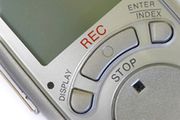
For these reasons, many practices find that medical transcription services provide the best combination of cost and accuracy. These services allow physicians to dictate notes either over the phone or using a handheld digital recorder. Qualified medical transcriptionists (MTs), who are trained in medical terminology and procedures, then listen to the recordings and accurately type out the notes.
This BuyerZone Medical Transcription Services Buyer's Guide will explain how medical transcription services work, outline the typical costs, and give you the information you need to choose the right medical transcription services for your practice.
Get underway by reviewing the basic process of how a medical transcription service works. Doing so will not only help refine your search but also enable you to tailor the solution you do select so that provides the most beneficial performance overall. Get started here.
How Medical Transcription Works
Physicians initiate the medical transcription process by dictating their notes into a recording device. The two most popular options today are toll-free phone lines or handheld digital recorders, and nearly all services support both these methods.
There aren’t significant reasons to choose one over the other. Both are easy to use and allow you to record multiple patients’ notes in a single session. Both are also portable, since you can use your cell phone. Handheld recorders do carry an additional hardware cost, but they often have better sound quality than telephone dictation. And since some services charge different rates depending on the quality of your recordings, better audio quality can help you save in the long run.
Some practices still use audio cassettes to record notes, but their numbers are dwindling - as are the number of services who accept cassette tapes for transcription. Other potential recording options may include CD, DVD, your computer, and even VHS. You'll have to talk with a sales representative from the particular transcription service you are considering to determine what recording methods are accepted.
Communicating with your transcription service
There are several methods for sending audio recordings to and receiving transcripts from your service provider. Whichever you choose, make sure there's an emphasis on security: these communications must be secure and protected to ensure patient confidentiality.

If you create digital recordings using a handheld device or your computer, you will need to submit the recordings via the Internet. This can be done using a secure web site, a file transfer protocol (FTP) client, custom software from your provider, or even encrypted email. (Please note, however, that standard email is not secure enough to satisfy HIPAA requirements.)
Telephone-based medical transcription requires one less step in that dictated notes are recorded directly onto the provider’s servers.
Once the notes are transcribed, they are most commonly returned to you as Microsoft Word files. They can also be converted into PDFs or other text formats and are easily integrated into any electronic medical records or medical practice management software you may be using.
Some providers may also offer to print and mail your files to you, but most often files are sent using one of the aforementioned methods (namely: a secure website, FTP, custom software, or encrypted email). Delivery via fax is rare, but you can still find providers who offer this service, as well.
If you are not currently using any sort of document management software consider using a comprehensive medical transcription service that includes an online system for storing both your audio files and transcripts. These systems organize your files by date, doctor, or patient, and progress is tracked as they're being transcribed. While such services may carry an additional fee, the content management benefits they provide can be beneficial to a busy practice.
With the highly complex language often associated with medical terms and diagnoses, it's critical to find a medical transcription service that is not only efficient but, most importantly, accurate.
Buying Considerations
Turnaround time, accuracy, and security are the three most important factors to evaluate when choosing your medical transcription service. Every provider will stress their ability to deliver on all three.
1. Turnaround time
The standard transcription service offers 24- to 48-hour turnaround. Most will also offer STAT service, which provides one-, two-, or four-hour turnaround at an additional cost. A few questions to ask regarding turnaround times are:
- How does time of day impact the delivery schedule? If you submit notes at 6 or 7 pm for STAT transcription, for example, will they get the immediate attention they need? Or will they be queued up for the following morning?
- How do they back up their promised turnaround times? If they return transcriptions late, do they offer a discount or waive charges?
- Do different types of notes have different turnaround times?
2. Accuracy
Inaccurate transcriptions are worse than no transcriptions at all: serious mistakes can endanger your patients' well-being. The medical transcription services you choose should employ certified medical transcriptionists (MTs) with significant experience, as well as quality assurance (QA) staffers to double check transcripts before they're released. Ask how many QAs each service has on staff, as well as how many will review each of your transcripts.
The services' accuracy claims are all well and good, but the proof is in the results. Your doctors have to review and accept each transcript as it's delivered. You'll occasionally find "inaudible" in places, which is to be expected and can usually be easily fixed. However, if you find an ongoing pattern of errors, it's probably time to switch to a different transcription service.
Also, be sure to ask any provider you are considering if they carry liability insurance to provide financial coverage in case any errors and omissions on their part affect your patients' care.
3. Security
Medical transcription services are subject to HIPAA rules about patient confidentiality the same way your office is. For web-based communication, the industry standard for security is 128-bit SSL security. You don't need to learn the technical details, but you do need to make sure any web page that you use to transfer patient data uses SSL.
They're easily identified by the "https" prefix in your browser's address bar and the lock icon in the lower right corner of your browser. If the provider uses another communication method, ask what steps they take to make sure it's secure.
Physical security at the service is important as well. Ask each potential provider what measures they take to ensure the security of your data at their locations: careful employee screening and tracking is essential.
Another important aspect of security is audit trails. Audit trails keep track of each person who accesses a given set of notes and what modifications they make. They're invaluable in tracking problems if any do occur.
Bearing in mind the quality control needs mentioned above, it's time to consider the difference between offshore and domestic medical transcription services. As you might guess, one is cheaper than the other.
Offshore or Domestic Medical Dictation?
Many medical dictation services use both U.S. and international transcriptionists. This gives them a huge advantage in responsiveness: having one team of transcriptionists in the Philippines or India and one in the U.S. allows them to guarantee response times no matter when you submit your medical dictation, without having to operate two or three shifts in one location.
Professional transcription services hire only qualified transcriptionists. Considering the amount of training MTs receive and the QA processes in place, there should be little difference in accuracy no matter where the MT is located.
However, some transcription services prefer to match physicians with transcriptionists who are geographically close by (not just in the US, but in the same state or region) in order to mitigate the effect of accents and dialect on your communication. Meanwhile, some medical practices feel that it's important to use only U.S.-based transcriptionists.
Still, there is no denying the cost savings services can pass on when they use offshore MTs for some or all of their work; therefore, most providers who have both U.S. and offshore employees will allow you to specify your preference.
While the national debate about offshoring - using employees in different countries around the world - can get quite heated at times, it's less controversial in the transcription industry. One reason is that unlike outsourced call centers, medical dictation services don't deal with external customers: they work directly with your staff, so there's no public relations angle to worry about.
In the next section, we review how to choose the best medical transcription service below. This short litmus test can save you substantial time.
Choosing a Medical Transcription Service

Once you have narrowed your list of potential providers based on those who meet your requirements for turnaround time, accuracy, security, and outsourcing practices, it's time to compare them in more detail. The most effective way to do this is to simply try them out.
Many providers will let you do a trial run at no charge - take advantage of this. There is very little overhead involved in setting up an account, so it's worthwhile to send a recording or two to each of the providers you're investigating. Some medical transcription services may limit the length of these trial transcriptions, so don't expect complete transcripts of complicated diagnoses.
For each of these trials, pay attention to the details of how the provider works and results such as:
- How long does it take them to respond?
- Is the accuracy of the transcript close to 100%?
- Are their customer service reps helpful and friendly?
The providers should give your trial transcript a little extra attention because you’re evaluating them, so expect top-notch service. Use this as an opportunity to get a sense of how each medical transcription service compares in their reporting, communications, and response time.
Other considerations
Ask prospective providers if you'll have a dedicated team of MTs assigned to your account. One advantage to working with such a provider is that over the long term their transcriptionists will become familiar with your practice, including each doctor's tendencies and accent. It can also be helpful to know how long the average MT's tenure is at the service; high turnover means you'll constantly be bringing new MTs up to speed.
MTs become specialists the same as doctors do: one MT may be more familiar with radiology and imaging, while another specializes in arthroscopic surgery. Some transcription services will let you request specific MTs with each set of notes you submit, which can be very useful for specialty practices.
Generally, transcription results are returned in fairly plain text formats. If you need your transcripts in more specific formats, look for a medical transcription service who will work with you to develop templates they'll use for all your transcripts.
The cost of medical transcription services varies depending on a number of factors. Find out how much you can expect to pay (and how to get a better rate) with the pricing data we've compiled below.
Transcription Service Pricing
Medical transcription services usually charge per line of text. The industry standard is 65 characters to a line, including spaces, but not every transcription service adheres to that standard. Some may define lines with fewer characters or count each hard line break as a new line, so be sure to get the details from each provider you talk to.
Check out what other BuyerZone users have paid for medical transcription services.
Prices ranges from 7 cents to 25 cents per line, but average around 12 cents to 14 cents per line. To get a sense of how much you'd be paying, open some typical patient notes in a word processing program and use the "character count" feature. Divide that by 65 to get the number of lines of text, then multiply by the cost per line you're quoted.
In some cases, pricing can be set up on a per report basis, instead of per line. This is mostly done for doctors who submit a high number of very short reports, such as radiologists, but you may be able to negotiate it in other situations if you prefer it.
Pricing varies according to several factors. You'll get better rates with a higher volume of transcription. You'll have to pay more for STAT transcriptions. And because MTs who can handle niche specialties are less common, you may have to pay a higher rate if you're a specialty practice.
Generally, you won't be required to commit to a long-term contract or minimum volumes, but you may be able to get better rates if you commit to using a service for all of your transcription needs.
Be sure you ask prospective providers about any additional fees too, such as set up fees (generally this would be a nominal charge of $10 or so), tech support fees, and monthly subscription fees.
If you decide to use a handheld digital recorder, you can find them for as little as $75. While almost any audio format is acceptable, MP3 is the preferred format because if offers the best combination of quality and small file sizes. Before buying a recorder, ask the transcription service for their recommendations and requirements. They may offer to sell you the recorder directly, but you can usually get a better deal on your own.
Medical Transcription Service Tips
Look for a wide range of accommodation. Different physicians will prefer different types of recording devices. In larger practices, it's usually a good idea to choose a service that lets you submit your notes in multiple ways, so you can accommodate each doctor's individual preferences.
Start slow. It will take some time for you and your MTs to get to know one another and develop a routine, so start slow. Requesting just a few, smaller transcriptions at first. This will allow you to iron out any communication problems or other difficulties that arise before moving on to bigger jobs.
Don't assume they'll be familiar with new terms. For accuracy's sake be sure to spell out any new drug names or procedures as they come up in your recordings.
Save them time (and you money). If you have frequently transcribed items, like form letters, supply your provider with templates and address lists to make the transcription process more efficient.