
Buyer's Guide
Introduction to Utility Vehicles
After seeing standard golf carts adapted to a wide range of uses, manufacturers have created a new class of vehicle for commercial and industrial use: the "utility vehicle." These vehicles are popular with many kinds of businesses that have lots of ground to cover or lots of cargo to haul: academia, large manufacturing plants, landscaping, forestry, municipal workers, and more.
In some cases, utility vehicles are built on a standard golf cart frame, with a bed on the back for hauling equipment and supplies. In other instances they're built from the ground up to serve as heavy-duty material handling vehicles. Other specialized versions are designed for use on rough, hilly ground or to carry more people.
This BuyerZone Utility Vehicles Buyer's Guide will help you understand everything you need to know about buying a utility vehicle:
- What types are available
- How to choose between gas and electric power
- What to look for in a seller
- How much you can expect to pay for a utility vehicle
Once you have all the information you need, you can submit a free request for utility vehicle price quotes. It's fast and easy to do, and puts you in touch with up to six qualified suppliers in your area.
As you begin your search, analyze the terrain of your facilities and grounds to determine how robust your utility vehicle needs to be. From there, match your needs to one of the three basic types available, each covered below. Get started here.
Utility Vehicle Types
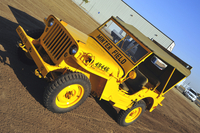
Start by gathering information on your expected driving terrain, including what type of surfaces, hills, and weather. A low horsepower vehicle is more economical and more than capable of ferrying personnel around a warehouse - but it would be insufficient for a hilly campus.
Estimate the weight you need it to carry: some burden carriers can haul up to 5,000 pounds. Decide how many passengers it needs to carry, as well: you'll have to balance the number of seats with the available space for cargo. A related feature is the type of bed you want for hauling: a simple low-walled box, a bed with rails, or even one that dumps.
Know the physical size cart you need. The typical utility vehicle is around 6' tall, 4' wide, and 8' long, but they can range quite a bit - if you have specific narrow or low spaces to get through, make sure you have those limiting factors in mind before you start shopping. Also, most of these vehicles weigh around 900 to 1000 lbs but can be even more - make sure your garages, bridges, and other surfaces are strong enough to support them.
Once you settle on the basics, there's a wide range of options to choose from, including lights, different types of tires, tops, sides, and windshields, and more. Your decisions on these extras should be based on your intended application.
Types of utility vehicles
- Basic utility vehicles are used in a variety of ways. Facilities with extensive landscaping needs, like colleges, universities, office parks, sports complexes, and cemeteries, use them to carry tools, sod, and fertilizer. They’re also commonly used by maintenance personnel in large manufacturing plants to haul tools, parts and get to far-flung locations quickly. Foremen and managers use them as a quick way to get around and keep operations running smoothly.
- Heavy utility vehicles called burden carriers can be used to complement other types of material handling equipment, like fork trucks. The biggest models can carry several thousand pounds of cargo and tow even more, yet they're small enough to go spaces forklifts can't.
- Trail utility vehicles carry hay, seed, and other essentials around large farms or ranches. Like ATVs, they can get around on the dirt tracks of the back woods. While they can't go 40 mph like an ATV, they can carry two people and a large load - a huge improvement over ATVs for farming work.
Where you operate your utility vehicle will also impact your purchase decision in terms of the fuel required. Many in-door uses will require electric models as the noxious fumes of a gas engine could be toxic to people in an enclosed area.
Gasoline or Electric Power for Your Utility Vehicle?
Another central decision you'll have to make is whether you want an electric or gas-powered utility vehicle. Here are some of the points to keep in mind.
Electric utility vehicles
Electric utility vehicles use a bank of standard lead-acid batteries to run an electric motor. They're designed to be used all day then recharged using a standard power outlet. Some brands support "opportunity charging," which allows you to simply plug in the vehicle whenever you're not using it. For two- or three-shift operations, though, you'll need a model that allows for an easy change of batteries when one set runs out.
The two most common power choices are 36 volt or 48 volt - in most cases, a 48 volt model provides better performance. You may also find 24 volt and 72 volt models, but they're less common.
Electric utility vehicles have greatly increased power and range over models available five or ten years ago. Features like regenerative braking, which helps recharge the batteries as the vehicle slows or goes downhill, help increase battery life.
A distinct advantage of electric vehicles is their cost to operate: it can be five or 10 times more expensive to operate a gas model. Especially for businesses buying several vehicles, this alone can be enough reason to choose electric. Another deciding factor for many businesses is indoor use: emission-free electric utility vehicles can be used indoors, gasoline engines can't.
Gasoline utility vehicles
Gas-powered utility vehicles are no longer as popular as electric models, but for some applications they are still the top choice. With gasoline-powered vehicles you can always carry an extra can or two of gas, giving you much greater range. For farming and hunting use, this is a big advantage.
They're also a good choice for sustained use: spending a weekend away from electric power, or driving quite a bit at night with the lights on. Gasoline engines also provide more power for towing or carrying heavy loads.
Newer 4-cycle engines run cleaner and quieter than older 2-cycle engines that burn an oil and gas mixture, but they're still dirty and loud compared to zero-emission electric motors.
There are a small number of diesel utility vehicles, as well. Diesel is often cheaper than regular gas, and also provides more torque, which is useful for heavy-duty hauling and towing. In most cases, they're fairly comparable to gasoline models in performance and price.
Choosing a Utility Vehicle Seller
Which utility vehicle seller you choose to buy from will be as important as the model you pick. The seller will provide the service and support to keep your vehicle running smoothly, so it is important that you find one who is reputable, stable, and can provide top-notch service.
Some important questions to ask when evaluating sellers:
- How long have you been in business?
- What kind of parts inventory do you keep on site?
- How many technicians do you have?
- Do you do on-site service?
- Do you have guaranteed response times when a piece of equipment breaks down?
When you're visiting the sellership, ask to see the parts warehouse and service areas for yourself. This can give you a good sense of their capabilities. Look for sellerships that carry full lines of the brands you're interested in, as well - not just one or two models.
You should work with factory-authorized utility vehicle sellers. Many sellers carry multiple brands and as a result hold factory authorizations from each manufacturer. The authorizations give them access to OEM parts and factory training for technicians, ensuring the quality of repairs. You can go onto the manufacturers' web sites and look up their authorized sellers if you have any questions.
Don't discount your own comfort level, as well. Your relationship with the sales staff is important: you should trust that they are giving you honest answers to your questions and not just trying to sell you the most expensive vehicle they can.
Utility vehicle maintenance and warranties
Maintenance is an important consideration for any vehicle. Gasoline engines require more ongoing maintenance than electric motors - things like changing spark plugs, air filters, and oil. On the other hand, electric vehicles need to have the water level in their batteries checked regularly, which is a simple but critical task. More significantly, the batteries in electric vehicles need to be replaced every couple of years at a cost of $400 to $500. The overall maintenance costs work out to be fairly similar - gasoline engines spread the cost out more, but require more frequent servicing.
The bottom line is that having this basic maintenance done regularly - on the schedule recommended by the manufacturer - can drastically extend your vehicle's lifespan and improve its performance. Something as simple as making sure there's enough oil in the engine and air in the tires can help safeguard your investment. With proper maintenance, you can expect about five years of use out of a gasoline engine and 10 years out of an electric motor - but manufacturers report both types lasting 15 or even 30 years in some cases.
In a commercial setting, it's usually worth purchasing a service contract to cover this type of maintenance. Usually the seller will be able to provide on-site service for all scheduled maintenance, although you may save money on the service contract by agreeing to bring your vehicles in to their shop. For businesses that have a maintenance crew on staff and for individual purchases, a service contract may not be worthwhile: basic automotive expertise is all that's required for most upkeep. The seller should still provide the parts you need.
There's just one more thing: cost. We've compiled a comprehensive range of price info on top new and used utility vehicles that can help you budget accordingly and even negotiate for lower costs in some instances.
New & Used Utility Vehicle Pricing
Commercial utility vehicle pricing can vary quite a bit depending on the type of vehicle you choose. Stripped-down personnel carriers can be found for as little as $3,000, while fully configured burden carriers can reach $20,000. More common are prices of $8,000 to $12,000 for industrial utility vehicles.
See actual prices BuyerZone users paid for new and used utility vehicles.
The more options you add, the more you'll pay. Some models are open-topped, some have a roof, and some have a roof and a windshield. Expect to pay $200 to $400 for a top and that much again for a windshield. A rain enclosure - usually roll-down plastic sides - can be a nice extra in wet climates.
For trail vehicles and commercial applications, one of the most important options is the carry bed: you can upgrade the size, depth, or type of cargo bed on your vehicle, including one that tilts or folds down. Models with four wheel drive will also bump up your total cost, but are much better for getting around on loose terrain or mud.
Buying used utility vehicles
For many businesses, buying used utility vehicles is the economical choice. There are two tiers of used: refurbished vehicles have been taken in by the manufacturer or seller, inspected, cleaned, and in some cases reupholstered. Dealers often sell refurbished utility vehicles with warranties, giving you additional peace of mind - for at least 30 days.
You can also buy "as is" vehicles. Dealers will still inspect them for obvious damage, but they won't have the comprehensive overhaul that a refurbished vehicle would have. Make sure you take a test drive of the model you want.
Used utility vehicles can be found for as little as $2,000. You'll rarely find anything for much less than that - at least, not anything you'd want to depend on for transportation. You'll still pay more for fancier models, but prices will be less than half what you'd pay new. Finding used gasoline utility vehicles can be a challenge, though, as owners tend to hang onto them until they're at the end of their useful life.